Arrows 500mm PA-18 Super Cub RTF — Beginner RC Plane, 3-Mode Gyro & Compact STOL Guide
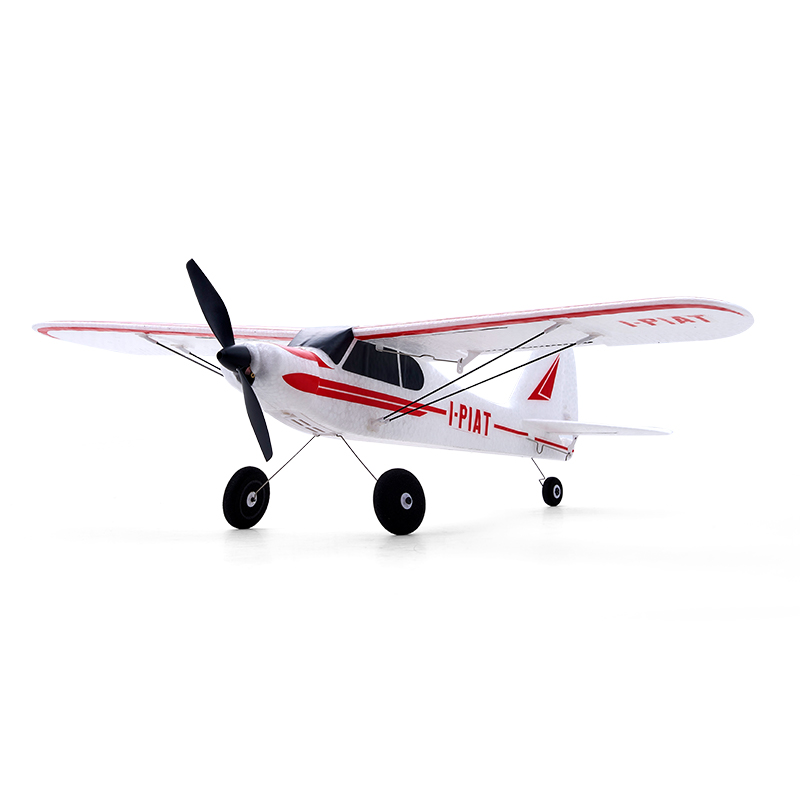
The Arrows 500mm PA-18 Super Cub takes the familiar high-wing bush-plane formula and compresses it into a very small Ready-to-Fly RC aircraft aimed squarely at accessible, low-pressure flying. With a 500mm wingspan, three-mode gyro assistance, a one-button U-Turn function and a lightweight EPP airframe, it is designed to reduce the barriers between opening the box and actually learning to fly.
The appeal is not simply that the PA-18 is small. At around 60g, with a 350mm fuselage and a compact 3.7V power system, this is a model that can be carried easily, flown from modest spaces and used for short sessions without the logistical commitment of a larger trainer. At the same time, full four-axis control through aileron, elevator, rudder and throttle gives the pilot room to move beyond basic assisted flight as confidence grows.
Arrows 500mm PA-18 at FairRC
FairRC currently lists the new PA-18 inside its Beginner / Trainer aircraft range.
Arrows 500mm PA-18 — Quick Specification
| Specification | Arrows 500mm PA-18 Super Cub |
|---|---|
| Type | Ready-to-Fly beginner / trainer RC airplane |
| Product code | AH031R |
| Wingspan | 500 mm / 19.7 in |
| Overall length | 350 mm / 13.8 in |
| Flying weight | Approximately 60 g |
| Airframe material | Lightweight EPP foam |
| Motor | 1020 hollow-cup motor |
| Radio | 6-channel 2.4GHz system |
| Battery | 3.7V 380–400mAh |
| Propeller | 2-blade 5.1-inch |
| Ailerons | Yes |
| Rudder | Yes |
| Flaps | No |
| Retracts | No |
| Gyro system | Three flight modes |
| Beginner assistance | U-Turn function and stabilization |
| Experience level | Beginner |
Why the 500mm Format Matters
Large RC trainers are often easier to see in the air and can offer excellent stability, but they also require more transport space, a larger flying area and more preparation.
The Arrows PA-18 takes the opposite approach.
A 500mm wingspan makes it genuinely portable. The model is small enough to fit easily into a car and can be carried to a local flying area without treating every session as a major outing.
That convenience matters for beginners because flying skill comes from repetition. A model that is easy to transport, quick to prepare and simple to recharge is more likely to be flown regularly.
High-Wing Layout and Dihedral — Why It Suits Beginners
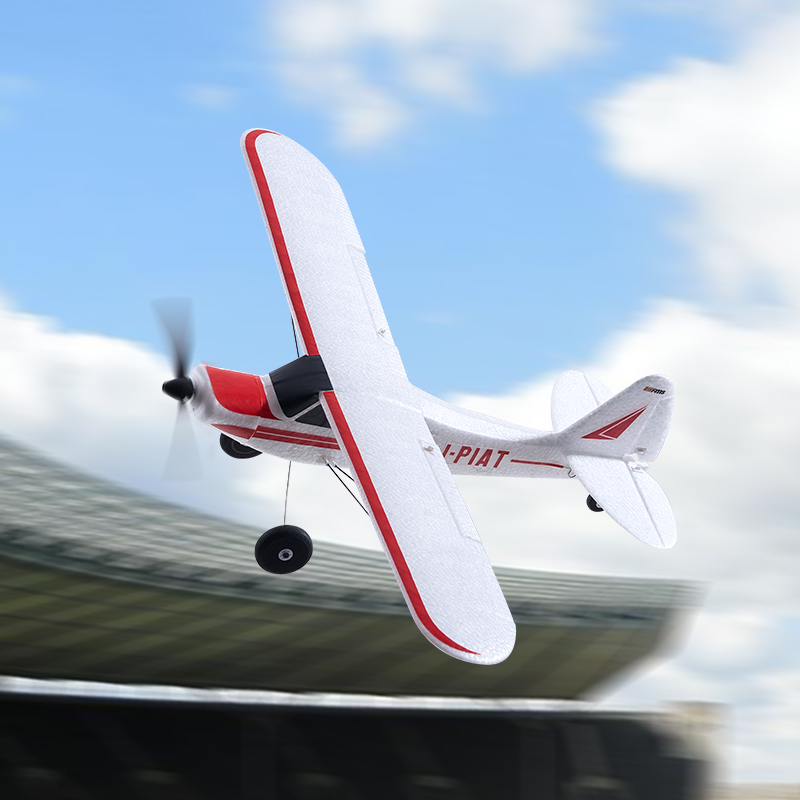
The PA-18 uses the classic trainer-friendly combination of a high-mounted wing and noticeable dihedral.
Placing the wing above the fuselage contributes to the stable character associated with traditional trainer aircraft, while the wing geometry helps the aeroplane resist some of the instability that makes more aggressive aircraft difficult for a new pilot.
That does not mean the model flies itself. Direction, altitude, orientation and throttle still need to be managed.
What the layout does is create a more forgiving platform on which those skills can be learned.
Three Gyro Modes Let the Plane Grow with the Pilot
The built-in three-mode gyro system is probably the most important feature for a first-time buyer.
Arrows provides three levels of flight behaviour:
| Mode | What It Means for the Pilot |
|---|---|
| Full Stabilization | Maximum assistance for early flights and basic orientation. |
| Optimized Stabilization | A middle step that retains electronic assistance while allowing more pilot input. |
| Manual Control | Removes the stronger beginner assistance for pilots who want more direct control. |
This progression is valuable because the aircraft does not have to be abandoned as soon as the pilot stops needing maximum stabilization.
A beginner can start with the most assisted mode, move toward reduced assistance and ultimately experiment with manual control on the same airframe.
Important: electronic stabilization helps the aircraft remain manageable, but it does not replace sensible flying conditions. A first flight is still best made in calm weather with plenty of clear space.
U-Turn Function — Useful When Orientation Starts to Go Wrong
One of the most beginner-focused features is the one-button U-Turn system.
Once the function has been enabled before takeoff and the aircraft is sufficiently far away, activating the return switch commands the PA-18 to turn back towards the pilot. Control can then be resumed.
This is not the same thing as GPS-based autonomous return-to-home.
Its purpose is much simpler: help a new pilot recover from the familiar situation where a small aircraft has travelled further away than intended and orientation becomes difficult.
For a 500mm model, that is particularly useful because judging heading becomes progressively harder as the aircraft gets smaller against the sky.
Propeller Protection Makes Sense on a First Aircraft

Beginners eventually make rough landings. That is part of learning.
Arrows therefore uses a propeller protection system designed to let the propeller release during an impact rather than forcing all of that load through the propeller and motor assembly.
The propeller can then be refitted.
That does not make the model indestructible, but it addresses one of the most obvious vulnerable points on a small nose-mounted propeller aircraft.
EPP Foam Keeps Weight Down
The airframe is built from EPP foam, keeping the completed flying weight to around 60g.
Low mass has several practical effects on a micro trainer.
The aircraft is easy to carry, requires a relatively modest power system and carries less energy during many minor mishaps than a much heavier model.
The manufacturer also warns that EPP can deform if left exposed to excessive heat, so the aircraft should not be stored in strong direct sunlight or a very hot vehicle.
A Proper Four-Control Aircraft, Not Just a Toy Plane
The small size can make the PA-18 look deceptively simple.
It still provides aileron, elevator, rudder and throttle control.
That distinction matters because the pilot is learning the control relationships used on more advanced hobby aircraft rather than relying on an extremely simplified two-channel system.
As stabilization assistance is reduced, those controls become increasingly important.
One-Button Loops and Rolls
The PA-18 also includes a one-button stunt function.
When the aircraft is flown above the manufacturer's stated minimum altitude in full stabilization mode, the pilot can activate the stunt function and command a loop or roll with the control stick.
The aircraft then recovers automatically.
This is not a substitute for learning aerobatics manually, but it gives a beginner an accessible way to experience manoeuvres that would otherwise require considerably more confidence.
STOL Character in a Micro RC Plane
The PA-18 Super Cub is closely associated with bush flying and short-field operation, so STOL behaviour is an appropriate part of the model's character.
The small Arrows version can take off from the ground or be hand-launched, and its light weight means it does not need the kind of runway associated with larger RC aircraft.
For casual flying, this flexibility is one of the strongest reasons to choose a small high-wing model over a faster warbird or EDF jet.
How Much Space Do You Actually Need?
Small does not mean indoors-anywhere.
The manufacturer's guidance suggests a flying area roughly equivalent to two basketball courts.
That is still dramatically less demanding than many larger RC aircraft, but it gives the pilot enough room to make turns, recover from mistakes and keep a sensible distance from obstacles.
Parks, open fields and suitable large backyards can therefore work, depending on local conditions and the available clear space.
Wind Matters More with a 60g Aircraft
Very light aircraft are convenient, but the same lack of mass means wind has a greater influence on them.
For beginners, Arrows recommends calm conditions or only a light breeze.
That is good advice.
The easiest first flight is not simply the easiest airplane. It is the easiest airplane flown in the easiest conditions.
Battery Life and Charging
The recommended battery is a small single-cell 3.7V pack in the 380–400mAh range.
Manufacturer guidance puts relaxed flight time at approximately 8–10 minutes, with more energetic flying potentially reducing that to around 4–5 minutes.
USB charging takes roughly 30 minutes.
Those numbers make spare batteries one of the most logical additions for someone who expects to spend a longer session at the field.
What Does RTF Mean Here?
RTF — Ready to Fly — is especially important for a beginner product.
The package is designed to include the core equipment needed to fly: aircraft, transmitter, installed electronics, flight battery and charger.
Preparation is minimal. The landing gear is attached, the battery installed and the system powered up.
That simplicity removes one of the common obstacles for first-time RC pilots: having to understand transmitter compatibility, receivers, ESCs, battery connectors and charger selection before the first flight.
Want the simplest route into the Arrows PA-18?
FairRC groups the new 500mm Super Cub with its current beginner and trainer aircraft.
Arrows PA-18 vs a Larger Beginner RC Plane
| 500mm PA-18 | Larger Trainer |
|---|---|
| Very easy to transport | Requires more storage and transport space |
| Can use relatively compact flying areas | Generally benefits from a larger field |
| Around 60g flying weight | Greater mass and physical presence |
| Low-pressure casual flight sessions | More substantial field-flying experience |
| Ideal as an accessible first aircraft | Better long-term platform for pilots wanting a larger trainer |
| More affected by wind | Larger models generally feel less micro-scale in breezier conditions |
Neither format is universally better.
The 500mm PA-18 makes the most sense when portability, simplicity and low commitment matter most. A larger trainer becomes more attractive when the pilot has access to an appropriate field and wants greater size, visibility and a more substantial aircraft.
A Natural Upgrade Path — 1300mm PA-18 or Ranger
The interesting thing about starting with the 500mm Super Cub is that the basic high-wing trainer philosophy can continue into a much larger aircraft later.
Arrows itself points pilots towards larger PA-18 and Ranger-type aircraft as potential next steps.
A larger model brings different requirements — more field space, more battery capacity, greater mass and greater responsibility during operation — but the move is logically easier after basic orientation, takeoff, landing and circuit skills have already been learned on a small trainer.
For a wider look at beginner aircraft selection, see our FMS Beginner RC Planes Explained — What to Buy First for Your First Flights.
Who Should Buy the Arrows 500mm PA-18?
The strongest fit is someone who wants a genuine hobby-grade introduction to RC flight without immediately committing to a large aircraft.
It particularly suits:
- first-time RC airplane pilots
- RC car enthusiasts curious about aircraft
- pilots who want a highly portable casual flyer
- experienced flyers wanting a small relaxed model
- buyers with access to parks or modest open flying areas
- anyone who values gyro assistance but also wants manual control available later
It makes less sense for someone specifically looking for high speed, large-scale presence, strong wind capability or the performance of an EDF or aerobatic aircraft.
What Makes It Interesting Beyond the Beginner Label?
The danger with describing an aircraft as a beginner model is making it sound as though it becomes irrelevant once the pilot learns to fly.
The PA-18 avoids some of that problem.
The manual mode, four-control layout, small physical footprint and quick preparation still give an experienced pilot reasons to keep it around as a convenient aircraft for short sessions.
That is arguably more useful than a trainer whose only purpose is to be replaced.
Final Verdict
The Arrows 500mm PA-18 Super Cub is built around a very sensible idea: make the first steps into RC aviation easy enough that the aircraft actually gets flown.
Its 500mm wingspan and approximately 60g flying weight keep transport and setup simple. The high-wing configuration, three-mode gyro and U-Turn function reduce the workload for a new pilot, while propeller protection and EPP construction acknowledge the reality that early flights will not always end perfectly.
More importantly, the aircraft still provides aileron, elevator, rudder and throttle control. That means the pilot can begin with stabilization assistance and progressively take more responsibility for the aircraft rather than immediately needing a different model.
The PA-18 will not replace a larger trainer for someone who wants to progress into serious field flying, and its very light construction makes calm conditions particularly important.
But as a compact first RC aircraft — or simply a small Super Cub that can be taken almost anywhere — the combination of scale-inspired design, assisted flight and genuine four-control capability is compelling.
Explore the Arrows PA-18 at FairRCBrowse More FairRC Aircraft
FairRC carries beginner trainers, Arrows aircraft, FMS warbirds, sport models and EDF jets alongside its better-known RC crawler range.
Browse All RC Airplanes at FairRC
Browse Arrows RC Airplanes at FairRC
Browse the Scale & Motion Catalogue
Explore RC aircraft, crawlers, model kits, paints, tools and other hobby categories in the Scale & Motion curated hobby catalogue.
Further Reading
- FMS Beginner RC Planes Explained — What to Buy First for Your First Flights
- FMS RC Airplanes — The Complete Buyer's Guide to Beginner Planes, Warbirds, EDF Jets and More
- Best FMS RC Airplanes — Guide for Beginners to Experts
- FMS Hobby and FairRC Buyer Guide — RC Crawlers, Aircraft, FPV, Mods and BATRAZZI Upgrades
- FMS EDF Jets Explained — 64mm, 70mm, 80mm, 90mm and Twin EDF Buying Guide
This site may contain affiliate links, sponsored links, paid links or referral links to external retailers, manufacturers, marketplaces and affiliate partner stores. If you click through and make a purchase, a small commission or store credit may be earned at no extra cost to you. These commissions help keep Scale & Motion running.
Scale & Motion does not sell products directly, process payments, manage orders, handle shipping, or provide after-sales support. All transactions, product quality, delivery, returns, warranties and customer service remain the sole responsibility of the respective seller, retailer, marketplace or manufacturer.
Editorial note: Articles on this site are produced from research, product information, retailer information, manufacturer details and editorial comparison. They are intended as independent editorial guides, not hands-on reviews, unless explicitly stated.
Accuracy note: Product specifications, compatibility details, body mounting systems, electronics, chassis differences, accessories, fitment, availability and product images may vary by model, version, retailer listing or manufacturer update. Readers should always confirm final details directly with the retailer or manufacturer before purchasing.
All images, logos, product names, brand names and trademarks remain the property of their respective owners. Product images are used for editorial, informational and illustrative purposes only. Images used in an article may not correspond exactly to the products promoted through affiliate links.
If you are a rights holder, content creator, retailer or manufacturer and wish to request credit, correction, update or removal of content, please contact Scale & Motion directly.
This site uses cookies and may contain affiliate links. By using this site, you accept the Privacy Policy. Read more.
The information provided on this site is for editorial, educational, historical, hobby and informational purposes only. Readers are encouraged to conduct their own research and verify product details before making any buying decisions.


